A strategy that works in one room is only the beginning. For neurodivergent children, youth, and adults, meaningful progress often depends on whether useful skills and supports can travel across home, school, community, and clinical environments. Consistency does not mean every setting must look identical. It means the people supporting the individual understand the same …
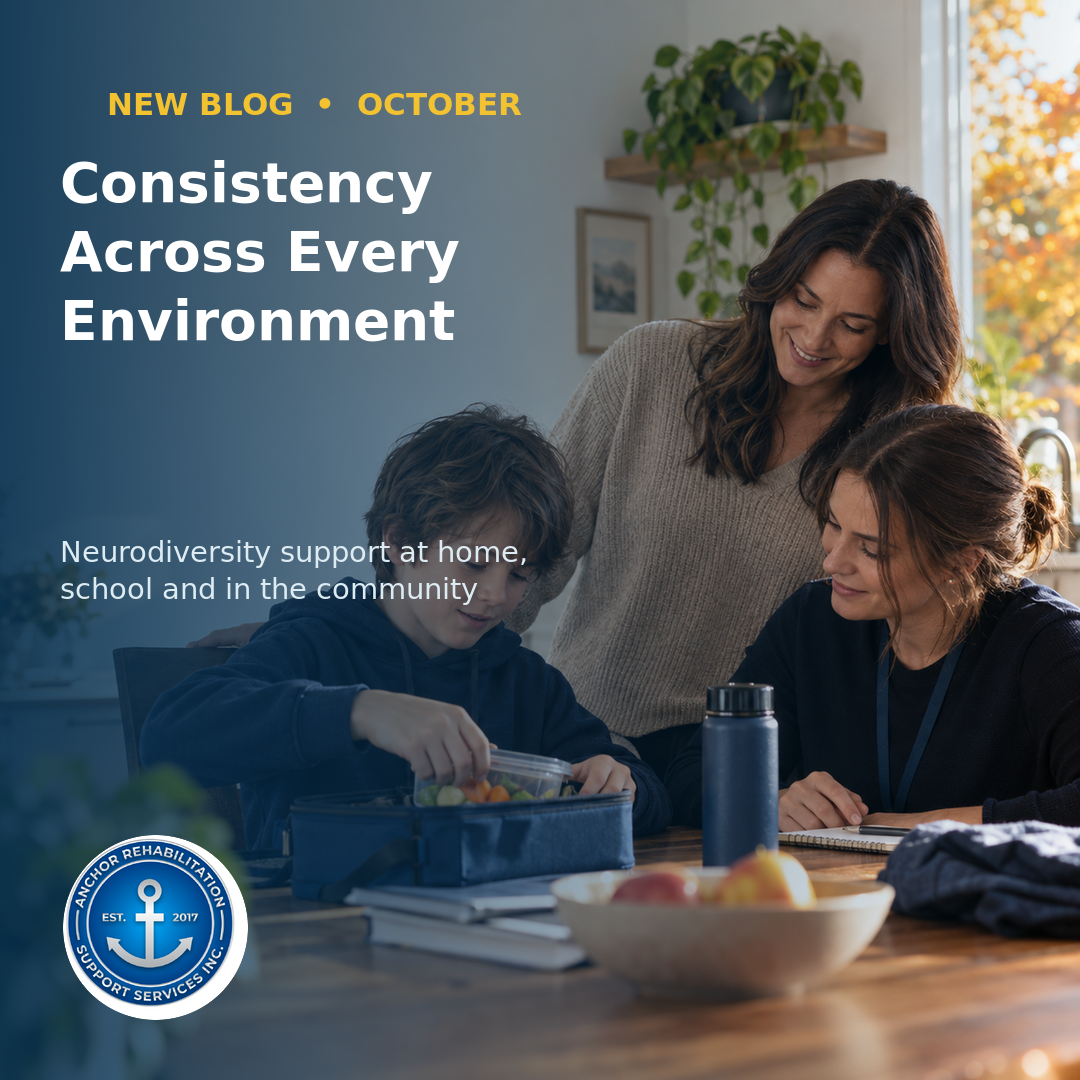
A strategy that works in one room is only the beginning. For neurodivergent children, youth, and adults, meaningful progress often depends on whether useful skills and supports can travel across home, school, community, and clinical environments.
Consistency does not mean every setting must look identical. It means the people supporting the individual understand the same priorities, use compatible approaches, and communicate when needs or circumstances change.
Why skills may look different across environments
A person may demonstrate a skill in a quiet, familiar setting and struggle to use it when the environment becomes busy, unpredictable, or socially demanding. Differences in sensory input, communication partners, expectations, routines, fatigue, and emotional safety can all affect performance.
This is not evidence that the person “will not” use the skill. It may indicate that the skill is not yet fluent, the environment needs adjustment, the prompt is unclear, or additional practice is needed in context.
What coordinated community-based support can address
Individualized programming may focus on:
- emotional regulation and coping strategies;
- functional communication and social interaction;
- daily living, vocational, or independence skills;
- safety awareness and community participation;
- transitions between activities, people, and places;
- caregiver coaching and capacity building; and
- collaboration with schools, agencies, and other professionals.
Goals should be meaningful to the individual and their family—not selected simply because they are convenient to measure. Person-driven care considers autonomy, dignity, strengths, preferences, culture, and quality of life.
The value of a coordinated RBA and direct-support model
Registered Behaviour Analysts can assess needs, identify patterns, develop evidence-informed plans, and monitor progress. Direct-support professionals can then help implement those plans where daily life unfolds. When the two functions remain connected, observations from real environments can inform clinical decisions and plans can be adjusted responsively.
Anchor’s model brings Registered Behaviour Analysts and rehabilitation or behavioural support staff together under one coordinated team. This creates a clearer line between assessment, planning, implementation, data, and communication.
Caregiver coaching without placing the burden on families
Caregivers often hold valuable knowledge about what helps, what creates stress, and what is realistic within the family’s routines. Effective coaching should recognize that expertise and build capacity without implying that families must become therapists.
Practical coaching may include simplifying a routine, identifying early signs of escalation, changing how choices are presented, using visual or environmental supports, or deciding which goals matter most right now. The aim is to make support more sustainable, not to add another impossible list of tasks.
Collaboration protects continuity
When providers work in isolation, the individual may receive conflicting prompts, expectations, or responses. Collaboration helps teams agree on priorities, define roles, and respond more consistently. It also creates a clearer picture of progress: not only whether a skill occurred, but where, with whom, under what conditions, and with how much support.
Anchor collaborates with families, occupational therapists, schools, Children’s Aid Societies, developmental service agencies, physicians, and other members of the care team. Services can be provided in home, school, and community settings across Ontario, based on referral needs and service availability.
When to consider a referral
A referral may be appropriate when a neurodivergent person has goals that need to be practised in everyday settings; existing strategies are not transferring between environments; caregivers or support teams need aligned, practical guidance; behaviour, communication, or independence needs are affecting participation; or a complex file would benefit from coordinated behavioural oversight and implementation.
Discuss a neurodiversity referral
If you support a child, youth, or adult who may benefit from community-based behavioural or skill-development services, Anchor can help you explore the most appropriate next step.
Discuss a referral: https://tinyurl.com/AnchorFreeConsult or learn more at Anchor Rehabilitation Support Services: https://anchorrss.com.